



Skip to content
Muhammad AR Zihad Muhammad AR Zihad

Learning and logs

Muhammad AR Zihad Muhammad AR Zihad

Learning and logs

  • PHP
  • Laravel
  • SQL
  • System Design
  • Privacy Policy
  • PHP
  • Laravel
  • SQL
  • System Design
  • Privacy Policy
Close

Search

Portfolio
Latest logs
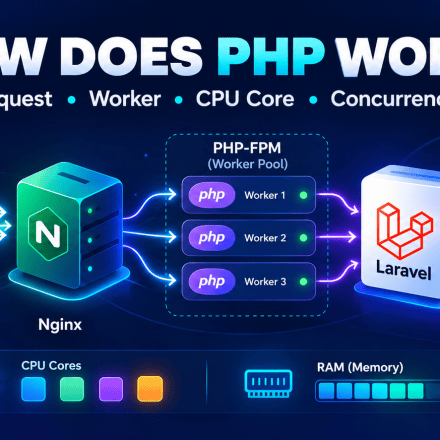
How PHP works with Nginx, PHP-FPM workers, Laravel, CPU cores, RAM, and database
October 6, 2026
How PHP Actually Works: PHP-FPM, Workers, CPU Cores, and Concurrency
Sherlock Holmes inspired illustration of evidence-based software debugging
September 30, 2026
Debugging Like Sherlock Holmes: Start With Evidence, Not Assumptions
YAGNI and over-engineering illustrated through the Room of Requirement
September 28, 2026
Your Software Is Not the Room of Requirement
AI-generated code and software engineering ownership illustration
September 28, 2026
AI Writes Faster. But Who Understands the Code?
Ship of Theseus illustration representing technical debt in software development
September 24, 2026
The Ship of Theseus and Technical Debt
Home/Software Engineering/Your Software Is Not the Room of Requirement
YAGNI and over-engineering illustrated through the Room of Requirement
Software Engineering

Your Software Is Not the Room of Requirement

By Muhammad AR Zihad
September 28, 2026 2 Min Read
0

There was a strange room at Hogwarts.

The Room of Requirement.

Whatever you needed, the room became exactly that.

Need a place to practice?

The room appears.

Need somewhere to hide something?

The room changes.

In other words: one room, many use cases.

In software engineering, this idea is dangerously attractive.

We love building abstractions that we imagine will handle every future requirement.

Suppose we need a payment flow.

But then we start thinking:

Today, it’s card payments.
Tomorrow, we might need bank transfers.
The day after, maybe crypto.
Maybe we’ll need multiple payment gateways.
Maybe retry policies should be configurable.
Maybe we’ll need country-specific rules.

So what started as a simple payment service becomes:

Interface – Strategy – Factory – Adapter – Resolver – Config layer – Event layer

The requirement was one.

The system was built for ten.

The problem is that Hogwarts’ Room of Requirement had magic.

Our abstractions don’t.

We have to guess future requirements.

And the more we guess, the more generic our abstractions become.

The biggest danger with generic abstractions is that they often look very “clean” at first.

Beautiful names.
Beautiful layers.
Beautiful diagrams.

Then, a few months later, a real requirement arrives.

And it doesn’t fit the flexibility we imagined.

So the exceptions begin.

One if.

Then another flag.

Then specialCase = true.

Eventually, the abstraction that was supposed to make the system future-proof becomes the biggest obstacle to changing it.

This is where YAGNI — You Aren’t Gonna Need It — becomes important.

YAGNI doesn’t mean you should never think about the future.

It means asking:

Is there a real requirement for the flexibility that I’m adding complexity for today?

Good abstractions usually don’t start out “generic.”

They start by solving a specific problem.

Then a second similar use case appears.

Then a third.

A pattern starts to emerge.

Then the abstraction comes out of that pattern.

In other words:

Don’t design for every possible future. Design so that change is possible when the future actually arrives.

The Room of Requirement could become anything because it had magic.

Our software can’t.

And sometimes, while trying to build a system that “can do anything,” we end up building one where even the simplest thing becomes unnecessarily difficult.

So before introducing another abstraction, there’s one question worth asking:

Is this solving a real problem we have today, or an imaginary problem we might have in the future?

The difference between those two is often the difference between clean architecture and over-engineering.

Post Views: 23

Tags:

Over-EngineeringSoftware ArchitectureTechnical debtYAGNI
Author

Muhammad AR Zihad

Follow Me
Other Articles
AI-generated code and software engineering ownership illustration
Previous

AI Writes Faster. But Who Understands the Code?

Sherlock Holmes inspired illustration of evidence-based software debugging
Next

Debugging Like Sherlock Holmes: Start With Evidence, Not Assumptions

No Comment! Be the first one.

    Leave a Reply Cancel reply

    Your email address will not be published. Required fields are marked *

    New ones

    • How PHP works with Nginx, PHP-FPM workers, Laravel, CPU cores, RAM, and database
      How PHP Actually Works: PHP-FPM, Workers, CPU Cores, and Concurrency
      by Muhammad AR Zihad
    • Sherlock Holmes inspired illustration of evidence-based software debugging
      Debugging Like Sherlock Holmes: Start With Evidence, Not Assumptions
      by Muhammad AR Zihad
    • YAGNI and over-engineering illustrated through the Room of Requirement
      Your Software Is Not the Room of Requirement
      by Muhammad AR Zihad
    • AI-generated code and software engineering ownership illustration
      AI Writes Faster. But Who Understands the Code?
      by Muhammad AR Zihad
    • Ship of Theseus illustration representing technical debt in software development
      The Ship of Theseus and Technical Debt
      by Muhammad AR Zihad

    Categories

    • Backend Engineering
    • PHP
    • Software Engineering

    You May Have Missed

    How PHP works with Nginx, PHP-FPM workers, Laravel, CPU cores, RAM, and database
    Backend Engineering PHP

    How PHP Actually Works: PHP-FPM, Workers, CPU Cores, and Concurrency

    Muhammad AR Zihad
    By Muhammad AR Zihad
    October 6, 2026
    Sherlock Holmes inspired illustration of evidence-based software debugging
    Software Engineering

    Debugging Like Sherlock Holmes: Start With Evidence, Not Assumptions

    Muhammad AR Zihad
    By Muhammad AR Zihad
    September 30, 2026
    YAGNI and over-engineering illustrated through the Room of Requirement
    Software Engineering

    Your Software Is Not the Room of Requirement

    Muhammad AR Zihad
    By Muhammad AR Zihad
    September 28, 2026
    AI-generated code and software engineering ownership illustration
    Software Engineering

    AI Writes Faster. But Who Understands the Code?

    Muhammad AR Zihad
    By Muhammad AR Zihad
    September 28, 2026
    Ship of Theseus illustration representing technical debt in software development
    Software Engineering

    The Ship of Theseus and Technical Debt

    Muhammad AR Zihad
    By Muhammad AR Zihad
    September 24, 2026

    Categories

    • PHP
    • Laravel
    • SQL
    • System Design
    • Privacy Policy

    Tags

    AI-Generated Code AI Assisted Coding Backend Development Code Review Concurrency CPU Debugging Engineering Ownership Laravel Maintainability Nginx Node.js Observability OPcache Over-Engineering Performance PHP-FPM Production Incidents Root Cause Analysis Software Architecture System design Technical debt YAGNI

    Copyright 2026 — Muhammad AR Zihad. All rights reserved.