

Skip to content
Muhammad AR Zihad Muhammad AR Zihad

Learning and logs

Muhammad AR Zihad Muhammad AR Zihad

Learning and logs

  • PHP
  • Laravel
  • SQL
  • System Design
  • Privacy Policy
  • PHP
  • Laravel
  • SQL
  • System Design
  • Privacy Policy
Close

Search

Portfolio
Latest logs
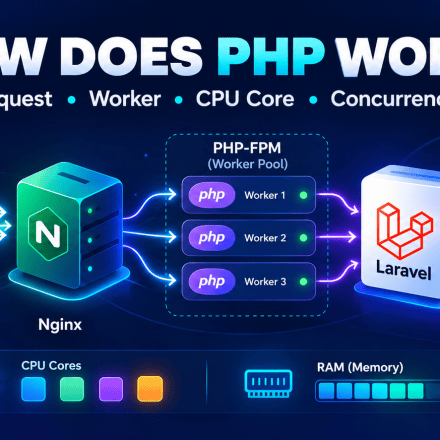
How PHP works with Nginx, PHP-FPM workers, Laravel, CPU cores, RAM, and database
October 6, 2026
How PHP Actually Works: PHP-FPM, Workers, CPU Cores, and Concurrency
Sherlock Holmes inspired illustration of evidence-based software debugging
September 30, 2026
Debugging Like Sherlock Holmes: Start With Evidence, Not Assumptions
YAGNI and over-engineering illustrated through the Room of Requirement
September 28, 2026
Your Software Is Not the Room of Requirement
AI-generated code and software engineering ownership illustration
September 28, 2026
AI Writes Faster. But Who Understands the Code?
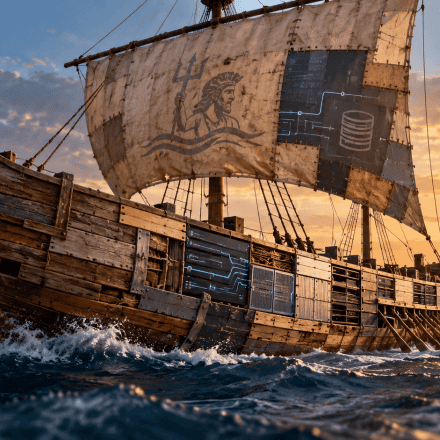
Ship of Theseus illustration representing technical debt in software development
September 24, 2026
The Ship of Theseus and Technical Debt
Home/Software Engineering/The Ship of Theseus and Technical Debt
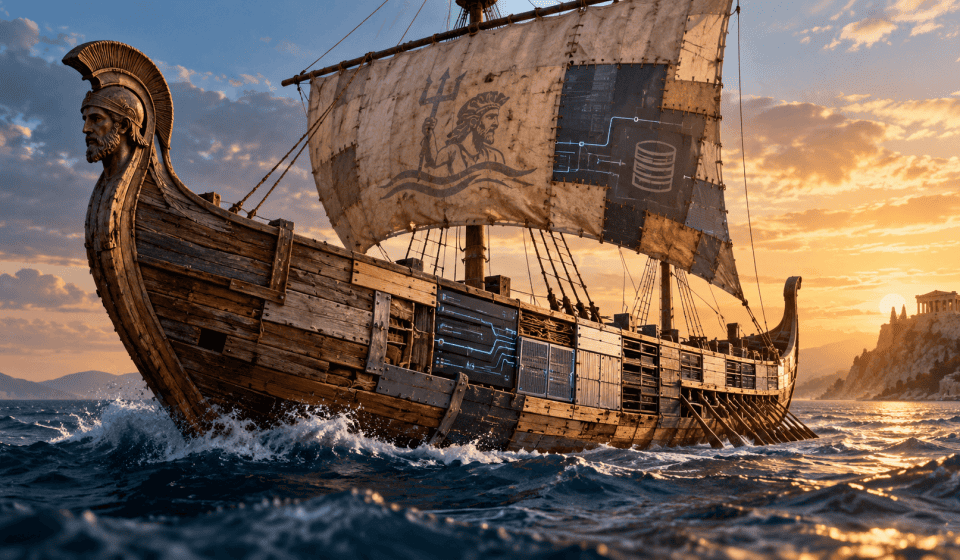
Ship of Theseus illustration representing technical debt in software development
Software Engineering

The Ship of Theseus and Technical Debt

By Muhammad AR Zihad
September 24, 2026 2 Min Read
0

In Greek mythology, there was a hero named Theseus who had a famous ship.

As time passed, the wooden parts of the ship began to wear out. One by one, the old planks were removed and replaced with new ones.

After several years, almost every part of the ship had been replaced.

That raised a famous question:

Was it still the same Ship of Theseus?

Interestingly, in software development, we face a version of this question almost every day.

An application may have been built five years ago.

Then, gradually—

  • A module gets rewritten.
  • A database table gets redesigned.
  • An old API gets replaced.
  • A service gets split.
  • A temporary fix gets added somewhere else.

A few years later, you may open the codebase and find very little of the original system left.

But there is one important difference.

When the old wooden parts of Theseus’s ship were replaced, the new pieces were still fitted with the structure of the ship in mind.

In software, we often don’t do that.

A bug appears — quick fix.
The client needs an urgent feature — another condition.
An existing function doesn’t behave properly — build another function around it.

Each decision, taken individually, may seem perfectly reasonable.

But five years later, the system becomes something where nobody can confidently answer:

“Why is this part built this way?”

That is one of the most dangerous forms of technical debt.

Technical debt is not simply ugly code.

Technical debt is a decision whose context has disappeared, while the system continues to pay its cost.

That is why engineering in a mature codebase is not just about adding new features.

Sometimes, we need to stop and ask:

  • Does this module still have the same responsibility?
  • Do we still need this abstraction?
  • Is this workaround still temporary?
  • Does this database design still make sense at today’s scale?

Software is never really built once and finished.

Like the Ship of Theseus, it changes a little every day.

The real question is:

Are we consciously evolving the system, or are we simply attaching new wood on top of the old?

Post Views: 31

Tags:

MaintainabilitySoftware ArchitectureTechnical debt
Author

Muhammad AR Zihad

Follow Me
Other Articles
AI-generated code and software engineering ownership illustration
Next

AI Writes Faster. But Who Understands the Code?

No Comment! Be the first one.

    Leave a Reply Cancel reply

    Your email address will not be published. Required fields are marked *

    New ones

    • How PHP works with Nginx, PHP-FPM workers, Laravel, CPU cores, RAM, and database
      How PHP Actually Works: PHP-FPM, Workers, CPU Cores, and Concurrency
      by Muhammad AR Zihad
    • Sherlock Holmes inspired illustration of evidence-based software debugging
      Debugging Like Sherlock Holmes: Start With Evidence, Not Assumptions
      by Muhammad AR Zihad
    • YAGNI and over-engineering illustrated through the Room of Requirement
      Your Software Is Not the Room of Requirement
      by Muhammad AR Zihad
    • AI-generated code and software engineering ownership illustration
      AI Writes Faster. But Who Understands the Code?
      by Muhammad AR Zihad
    • Ship of Theseus illustration representing technical debt in software development
      The Ship of Theseus and Technical Debt
      by Muhammad AR Zihad

    Categories

    • Backend Engineering
    • PHP
    • Software Engineering

    You May Have Missed

    How PHP works with Nginx, PHP-FPM workers, Laravel, CPU cores, RAM, and database
    Backend Engineering PHP

    How PHP Actually Works: PHP-FPM, Workers, CPU Cores, and Concurrency

    Muhammad AR Zihad
    By Muhammad AR Zihad
    October 6, 2026
    Sherlock Holmes inspired illustration of evidence-based software debugging
    Software Engineering

    Debugging Like Sherlock Holmes: Start With Evidence, Not Assumptions

    Muhammad AR Zihad
    By Muhammad AR Zihad
    September 30, 2026
    YAGNI and over-engineering illustrated through the Room of Requirement
    Software Engineering

    Your Software Is Not the Room of Requirement

    Muhammad AR Zihad
    By Muhammad AR Zihad
    September 28, 2026
    AI-generated code and software engineering ownership illustration
    Software Engineering

    AI Writes Faster. But Who Understands the Code?

    Muhammad AR Zihad
    By Muhammad AR Zihad
    September 28, 2026
    Ship of Theseus illustration representing technical debt in software development
    Software Engineering

    The Ship of Theseus and Technical Debt

    Muhammad AR Zihad
    By Muhammad AR Zihad
    September 24, 2026

    Categories

    • PHP
    • Laravel
    • SQL
    • System Design
    • Privacy Policy

    Tags

    AI-Generated Code AI Assisted Coding Backend Development Code Review Concurrency CPU Debugging Engineering Ownership Laravel Maintainability Nginx Node.js Observability OPcache Over-Engineering Performance PHP-FPM Production Incidents Root Cause Analysis Software Architecture System design Technical debt YAGNI

    Copyright 2026 — Muhammad AR Zihad. All rights reserved.